
Table of Contents
Vice City’s Vice: How GTA’s 90s Setting Revolutionized Gaming
Within the sprawling, sun-drenched landscapes of Vice City, life moves at a different rhythm. Neon lights flicker against the humid backdrop of a town seemingly frozen in the hedonistic excesses of the 1980s. This isn’t just a backdrop for crime; it’s the soul of Grand Theft Auto: Vice City, a game that masterfully leveraged the grit and glamour of the 1990s to redefine interactive storytelling and open-world exploration. More than two decades after its initial release, Vice City remains a landmark title, its nostalgic setting serving as a powerful catalyst that fundamentally altered the trajectory of gaming itself.
The Allure of the 90s: More Than Just a Time Travel
The decision to set Vice City in the neon-soaked, paranoia-fueled world of the 1980s was far more than a simple stylistic choice. It was a deliberate move to tap into the collective cultural memory and anxieties of the preceding decade, a time marked by significant social shifts, economic change, and a pervasive sense of change. Players stepping into Vice City weren’t just entering a game; they were stepping into a meticulously crafted era, complete with its distinctive fashion (the iconic pastel suits, big hair), music (synth-pop, rock, Miami Vice-theme inspired lounge vibes), and slang.
This setting provided a rich tapestry for narrative and gameplay innovation. Unlike its predecessor, Grand Theft Auto: San Andreas, which explored the sprawling, contemporary landscape of Los Santos based loosely on modern California, Vice City offered a contained yet vibrant world. Its smaller scale allowed for a more focused, character-driven narrative centered around Tommy Vercetti, a washed-up drug lord trying to rebuild his empire. The 80s setting allowed Rockstar Games to explore themes of aspiration, corruption, disillusionment, and the American Dream’s darker side in a way that felt immediate and relatable. It was a world where excess was both glamorous and dangerous, where the pursuit of power mirrored the era’s fascination with pop culture icons and societal decay.
Gameplay Innovation Rooted in Nostalgia and Realism
The Vice City setting wasn’t just window dressing; it was integral to the gameplay mechanics that would become hallmarks of the Grand Theft Auto series. The developers at Rockstar North drew heavily on the aesthetics and sensibilities of the 80s to create an immersive and revolutionary open-world experience.
One of the most significant innovations was the refined control scheme. While San Andreas had introduced analog stick movement, Vice City solidified the feel of navigating its streets. The driving dynamics, influenced by the era’s focus on car culture and movie stunts, allowed for more complex and stylish maneuvers, including the now-iconic air blips and drifts. The world itself was designed with 80s sensibilities in mind: wide boulevards, suburban sprawl, suburban mom-and-pop shops, towering skyscrapers reflecting the city’s ambition, and the ever-present, atmospheric haze of a humid Miami summer.

Rockstar also pushed the boundaries of what an open world could do. The non-linear structure allowed players unprecedented freedom. You could pursue the main storyline dictated by Tommy Vercetti’s quest log, or get sidetracked by a seemingly innocuous event – chasing a fleeing suspect, stealing a car, or simply exploring a hidden beach. The world reacted dynamically to player actions. Businesses could be robbed, leading to property damage and police attention; rival gangs would attack you; and the overall narrative felt less like a linear sequence of missions and more like experiencing the rise and fall of a criminal enterprise within its specific, vibrant environment. Ultimate GTA Games: Your Ultimate Guide to the Franchise
The integration of 80s music wasn’t just background noise; it was a core element of the atmosphere. Driving along coastal highways to a synth-pop track, cruising through suburban neighborhoods with rock anthems blaring, or escaping via helicopter with a high-energy dance track – the soundtrack amplified the player’s connection to the Vice City setting, making the world feel alive and pulsating with the era’s energy. **GTA 6 News: Explosive Leaks, Development Secrets & Everything We Know So Far** Ultimate GTA RP Experience: Dive into Immersive FiveM Roleplay Communities
Legacy and Lasting Impact: A World Transformed
The success and critical acclaim of GTA: Vice City cemented Rockstar’s reputation as innovators in open-world design and storytelling. Its influence extends far beyond its specific 80s setting, however. The meticulous world-building, the emphasis on emergent gameplay born from player freedom, and the complex character arcs set new standards for the industry.
While subsequent GTA titles explored different decades and settings (like the futuristic Futurelogue expansion for Vice City Stories, or the dystopian Social Club features), they all inherited the blueprint laid down by Vice City. Its success proved that a well-realized historical setting could not only enhance narrative depth but also drive significant gameplay innovation. It showed that players weren’t just looking for a generic open world; they craved an experience grounded in a specific time and place, allowing them to explore its nuances and consequences.
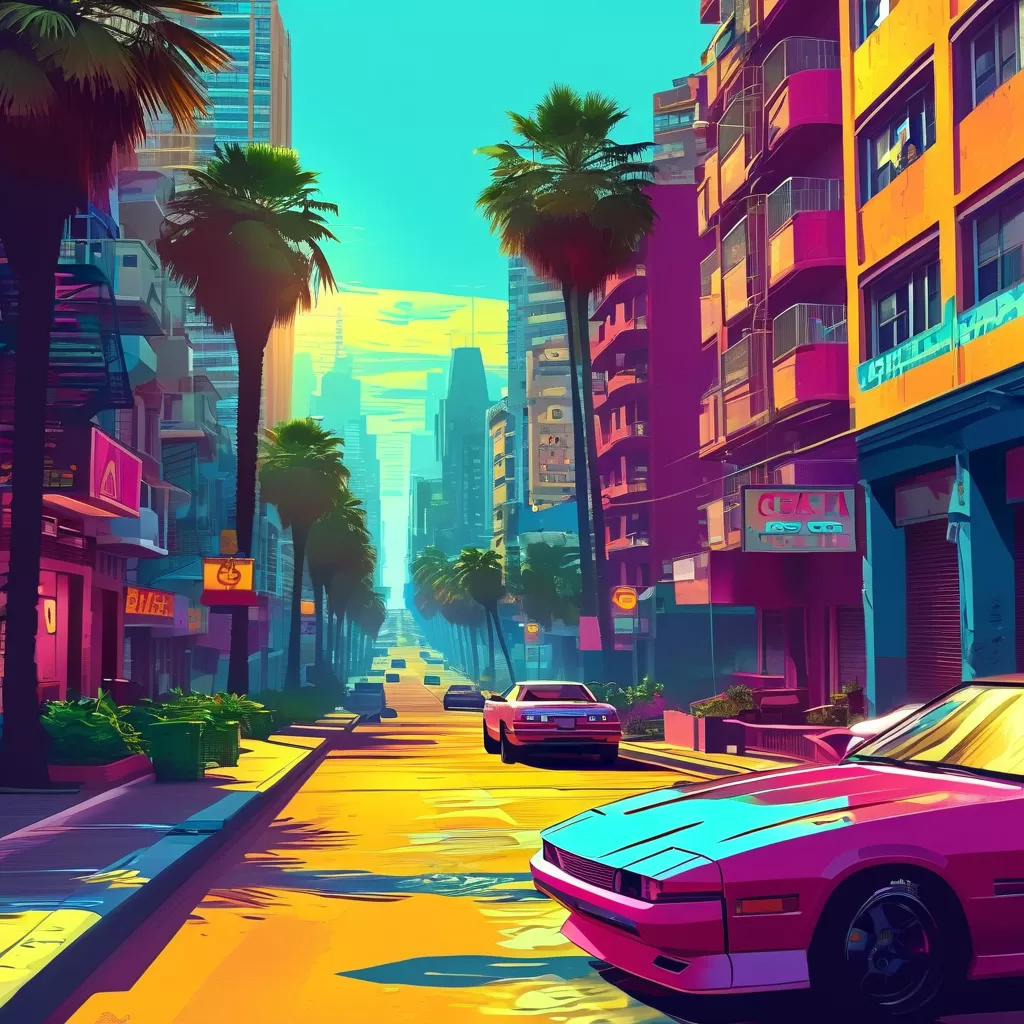
Decades later, the GTA: Vice City remake serves as a powerful reminder of why the original was so revolutionary. Its faithful recreation, enhanced graphics, and updated controls breathe new life into a classic, reaffirming the brilliance of its 80s setting. It demonstrated that by immersing players in a world defined by its time – its fashion, music, social norms, and anxieties – developers could create an experience that felt both deeply personal and expansively boundless.
From its neon-drenched streets to its complex social interactions, Vice City’s setting wasn’t just a veneer; it was the foundation upon which a new paradigm of interactive entertainment was built. It proved that the past could be a powerful catalyst for the future of gaming.
The Enduring Appeal of Vice City
Even today, revisiting Vice City feels fresh. The humor is sharper, the world feels more lived-in, and the sense of possibility and consequence remains potent. Players still marvel at the detail, the humor, and the sheer audacity of the ambition displayed in the game. It wasn’t just a game; it was an experience, a vivid snapshot of a specific moment in time that translated its unique flavor into an interactive narrative unlike anything seen before.
Its success paved the way for future generations of open-world games, demonstrating the power of strong world-building, compelling characters, and player freedom within a defined setting. The legacy of Vice City lives on not just in the GTA series but in the countless games inspired by its formula. It remains a testament to how a well-crafted historical setting, brimming with “vice” in both theme and execution, can revolutionize an entire genre and leave an indelible mark on the history of video games.