
Table of Contents
Ultimate GTA Games: Your Ultimate Guide to the Franchise
Welcome, fellow game enthusiasts, to a deep dive into one of the most influential and enduring video game franchises in history. Grand Theft Auto (GTA), a series that has consistently pushed the boundaries of open-world gaming, continues to captivate millions with its vibrant, albeit often morally grey, worlds, compelling narratives, and persistent online communities. This guide aims to be your ultimate resource, exploring the mainline series, their evolution, key elements that define the experience, and why the GTA games remain a cultural phenomenon.
The Genesis and Evolution: A Look at the Core GTA Titles
The story of the GTA games began with humble origins. Created by David Jones and Mike Dailly, the series first saw light in 1997 on platforms like the Sega Saturn. Early titles like Grand Theft Auto and Grand Theft Auto 2 laid the foundation with top-down perspectives and rudimentary but engaging gameplay loops.
The 3D Revolution and Mainstream Success
The true transformation began with Grand Theft Auto III (GTA III). Released in 2001, it was the first game in the series to transition to a fully three-dimensional, open-world environment. This shift was revolutionary. Players were no longer constrained by fixed camera angles; they could explore the gritty streets of Vice City with unprecedented freedom. GTA III, GTA: Vice City (2002), and the subsequent Grand Theft Auto: San Andreas (2004) formed a powerful trilogy that defined the third dimension era.
Grand Theft Auto III refined the core gameplay mechanics: cruising, shooting, and mission objectives set within an open city. Grand Theft Auto: Vice City, set in 1984, offered a nostalgic, Miami-inspired setting with a satirical take on American culture. It improved graphics, introduced a more sophisticated mission structure, and added memorable characters like Tommy Vercetti. The crown jewel of this era, however, was Grand Theft Auto: San Andreas. Set across three massive cities (San Fierro, Los Santos, and San Blas) mirroring real-world California, it provided unparalleled scope. Its diverse landscapes, complex storylines focusing on characters like Cesar Vialpando, and its cultural impact were monumental. The inclusion of San Andreas also significantly increased the series’ mainstream appeal, reaching a demographic beyond dedicated gamers.
The Modern Era: High Definition and Beyond
The turn of the millennium brought even greater graphical leaps and technical capabilities. Grand Theft Auto IV (GTA IV), released in 2008 for Xbox 360 and later PC, marked another significant milestone. Set in a fictionalized New York City called Liberty City, it featured cinematic storytelling, enhanced graphics, and a complex protagonist, Robert “Bob” Clark. The game’s realistic portrayal of urban decay and its compelling narrative received widespread critical acclaim.
Grand Theft Auto: The Los Angeles Adventures (GTA L.A.A.D.) (2006) and Grand Theft Auto: The Ballad of Gay Tony (2008) were episodic spin-offs set in Los Angeles, offering different perspectives and stories within the Rockstar Games universe. They explored the lives of minor characters and provided unique, albeit shorter, experiences.
Perhaps the most significant evolution came with Grand Theft Auto Online (GTA Online). Launched alongside GTA V, this persistent online world allowed players to experience the core single-player story missions from GTA V, plus engage in a vast array of user-generated and developer-driven activities. This included races, heists, freeroam exploration, and countless other multiplayer modes. The dynamism and constant updates keep the experience fresh, ensuring that the GTA games franchise remains relevant long after initial releases.
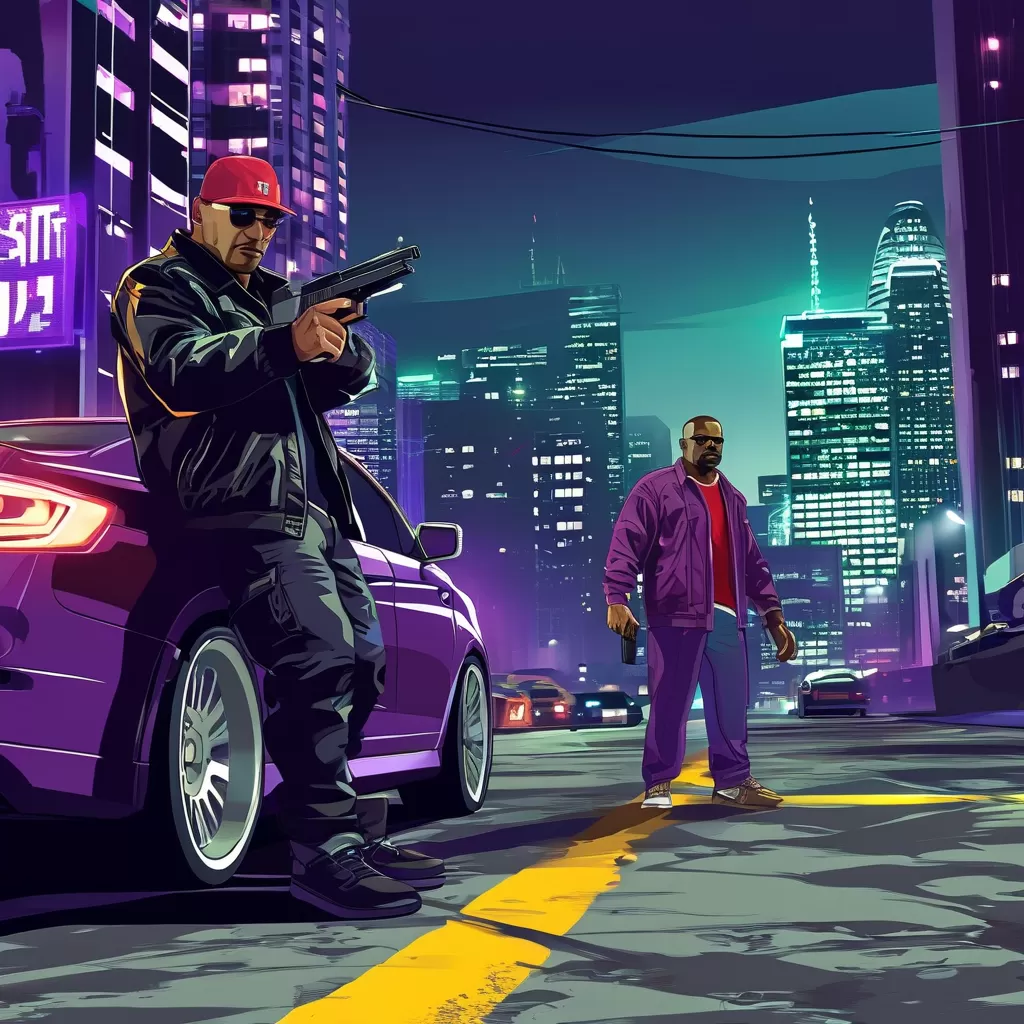
Grand Theft Auto V (GTA V), released in 2015, continues to be a cornerstone of the series. Its story weaves together the narratives of three protagonists: Michael De Santa, Lester Crest, and Franklin Clinton. The gameplay is enhanced by the ability to seamlessly switch between characters, carrying over progress and relationships. GTA V, and its multiplayer component, GTA Online, have consistently been the best-selling and most profitable entries, demonstrating the franchise’s enduring power. Unlock GTA 5 on PS5 with Cheat Codes: A Complete List of Tips, Tricks, and Secret Codes for Ultimate Power
Recent Installments and Future Directions
Following GTA V, the series saw the release of Grand Theft Auto: Chinatown Wars (2009), a tactical action title set in San Francisco, offering a different take on the series. Then came Grand Theft Auto: Criminals Wanted (2010), a mobile title bringing the series to smartphones.
In 2019, the franchise entered a new narrative phase with Grand Theft Auto: Overdrive, a high-octane racing adventure set in a fictionalized version of modern Los Angeles. It featured a stylized art style and a story focused on underground racing. Most recently, Grand Theft Auto: Roleplay (2022) offered a unique twist, allowing players to embody a criminal character and engage in a persistent roleplaying experience inspired by the Red Dead Redemption narrative style.
The future of the GTA games franchise remains exciting. Rockstar Games continues to innovate, promising even larger worlds and deeper narratives. The success of GTA Online suggests that online multiplayer will remain a vital part of the franchise’s identity. While specific future titles are kept under wraps, the legacy of the GTA games is secure, built on decades of innovation in open-world design and storytelling.
What Makes the GTA Games Tick? Key Elements
What separates the GTA games from other open-world franchises? Several key elements combine to create the unique GTA experience. **GTA 6 News: Explosive Leaks, Development Secrets & Everything We Know So Far** Revisiting GTA 2: Rediscovering the Classic That Defined Early 3D Gaming
The Open World
The hallmark of the GTA games is its expansive, interactive open world. From the sprawling streets of San Andreas to the vertical metropolis of Los Santos in GTA V, these environments are designed for exploration. Every corner hides secrets, side missions, and opportunities for chaos. The world feels alive, reacting to the player’s actions, with dynamic weather, day-night cycles, and emergent scenarios contributing to the immersion.

Core Gameplay Mechanics
The core gameplay revolves around driving (often poorly handled vehicles), shooting (with cover mechanics), stealth, and completing missions. Players are encouraged to deviate from the main plot, engaging in side activities like robberies, races, and protection rackets. The GTA games often feature a dual focus: the compelling single-player narrative and the addictive, ever-expanding multiplayer universe of GTA Online.
Within GTA Online, players can participate in various activities, many of which are GTA games in themselves. These range from competitive races like Ballas & Vercetti Kart Racing to complex heists like The Cayo Perico Heist, which required meticulous planning and teamwork. The economy within GTA Online allows players to earn money through gameplay and use it to purchase vehicles, weapons, clothing, and property, fostering a sense of progression and ownership.
Storytelling and Themes
The narrative depth found in the GTA games is often lauded for its complexity and social commentary. While the surface-level story involves crime and ambition, the series frequently explores themes of poverty, corruption, the American Dream, and the consequences of choices. The characters, despite their often unsavory motivations, are frequently well-portrayed and relatable, thanks in large part to voice acting and character development.
Rockstar Games has a reputation for creating detailed, immersive worlds that players can lose themselves in. The GTA games offer vast playgrounds for both linear story progression and emergent gameplay, ensuring there’s always something new to discover. Whether you’re cruising through the countryside of San Andreas, navigating the treacherous streets of Vice City, or competing in the latest GTA Online event, the series consistently delivers a blend of action, humor, and social observation.
Conclusion: The Enduring Legacy of Grand Theft Auto
The GTA games have undeniably left an indelible mark on the gaming industry and popular culture. From their humble beginnings to their current status as technological marvels, the series has continually evolved, pushing the envelope with each new entry. The combination of vast open worlds, engaging narratives, addictive multiplayer, and sharp social commentary ensures that the GTA games remain a vital force in gaming.
Whether you’re a veteran returning to the streets of Los Santos or a newcomer