Grand Theft Auto in Vice City: A Satirical Take on 1960s Miami Carjacking
When the dust settled on the original Grand Theft Auto games set in Liberty City, attention turned southwards. Enter Grand Theft Auto: Vice City, a title that cleverly uses its 1986 Miami backdrop to satirize not only urban decay and corruption but also the very nature of crime, technology, and societal anxieties prevalent during that era. Released in 2001, Vice City stands as a landmark title in the series, offering players a meticulously crafted, albeit fictionalized, dive into a world reminiscent of the 1980s, a period often tinged with nostalgia, excess, and underlying fear.
Table of Contents
The Setting: Miami’s Neon-Drenched Mirror
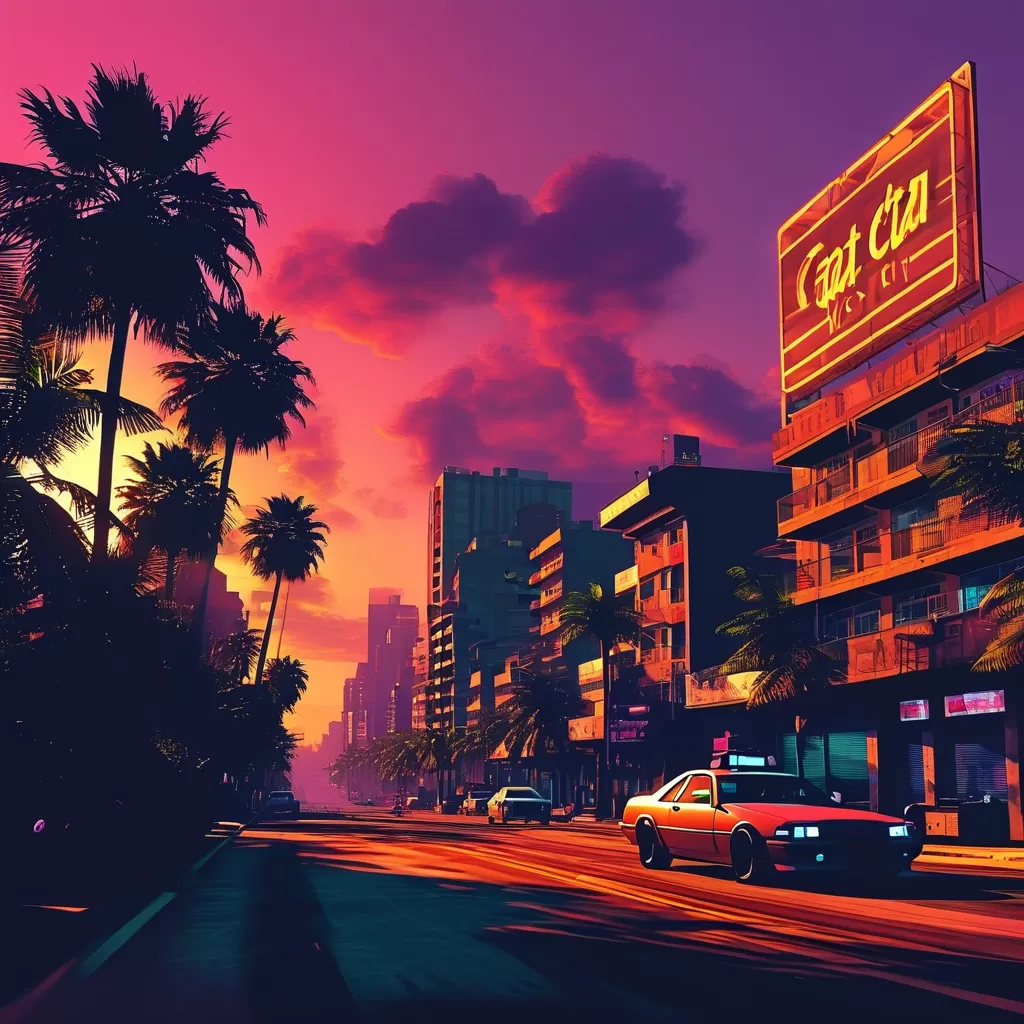
Vice City isn’t just a renamed Miami; it’s a satirical doppelgänger, a mirror held up to the perceived corruption and glamour of the era. Developed by Rockstar North in conjunction with Looking Glass Studios, the game world is a patchwork of real Miami locations reimagined with a gritty, 1980s aesthetic. Think Bayview, a sprawling slum echoing the urban decay of inner-city America during that time, complete with dangerous gangs and desperate residents. Contrast this with Shoreside Vale, Vice City’s coastal playground, designed to evoke the tourist-friendly facade of Miami Beach, but one riddled with its own seedy underbelly.
The game’s narrative thrusts players into this environment with a vengeance: protagonist Tommy Vercetti, a smooth-talking, cynical former mobster, arrives in Vice City fresh out of prison. His backstory – a victim of betrayal, framed for murder, and left to rot – is a classic rags-to-riches (or rather, from near-death to criminal riches) tale. Within minutes, Vercetti finds himself not just navigating the city’s streets but actively participating in its criminal enterprises, from low-level carjacking to high-stakes heists and turf wars. This immediate immersion is key to Vice City’s satirical success.
One of the most striking aspects of Vice City’s setting is its embrace of the era’s specific anxieties. The 1980s were marked by a fascination with crime, fueled by films and a certain media sensationalism, alongside the burgeoning crack cocaine epidemic which devastated communities like those depicted in Bayview. Vice City tackles these themes head-on, albeit with the characteristic Rockstar blend of dark humor and social observation. The vice in Vice City isn’t just about illegal activities; it’s a commentary on the moral ambiguity and corruption that seemed pervasive during that time.
Gameplay Mechanics: A Player-Driven Satire
While the narrative provides a framework, Vice City truly shines through its robust player-driven gameplay. The core mechanic – carjacking – serves as the engine for both progression and satire. Unlike its predecessor, which focused heavily on missions, Vice City encourages players to engage with the world in countless ways, often blurring the line between objective and improvisation.
The carjacking mini-game itself is a microcosm of the era’s themes. Players must disable the vehicle’s engine, lights, and sometimes radio before approaching the driver. Success relies on timing, reflexes, and often, a bit of luck. This simple mechanic is layered with social commentary. It reflects the era’s fascination with high-speed chases and the disposable nature of vehicles in urban landscapes. Furthermore, the sheer variety of cars available for hijacking, ranging from classic American muscle to sleek European imports, mirrors the consumer culture and status symbol obsession of the 1980s. Getting your hands on a fast, flashy car isn’t just about transportation; it’s about achieving that desired 1980s cool factor.
Beyond the core hijacking, the game world brims with activities ripe for satire. Players can engage in amateur radio broadcasting, listening in on police chatter and local gossip, a nod to the hobby’s popularity and perhaps the paranoia of constant surveillance. The game features missions involving everything from smuggling art across borders to infiltrating a rival gang’s turf. Each mission, and indeed, each hijacking, contributes to Vercetti’s rise in the criminal underworld.

The progression system, involving acquiring notoriety points and unlocking new vehicles and weapons, mirrors a ruthless climb up the corporate ladder of crime. It’s a satirical take on ambition and the lengths one might go to achieve it. The consequence system, where excessive violence can lead to a wanted level and police pursuits, adds another layer, suggesting that crime doesn’t pay and that the system ultimately crushes the individual.
Furthermore, the inclusion of side activities like the Hot Coffee mini-game (ironically later removed but indicative of the game’s depth) hinted at possibilities previously unexplored, allowing players to engage in even more debauched activities, further pushing the boundaries of what was considered acceptable in mainstream gaming at the time. This, too, can be seen as a satirical nod to the excesses of the era, albeit presented with a cheeky, subversive energy. Who is Lucia Caminos in GTA 6? The Rising Star or Hidden Threat?
Satire, Social Commentary, and the Legacy of Vice City
At its heart, Grand Theft Auto: Vice City is a masterclass in satire. It doesn’t shy away from lampooning the excesses, paranoia, and social problems of the 1980s. The depiction of rival gangs like the Mafia and the Slaves offers caricatures of organized crime, while characters like Lucky Lips provide comically cynical perspectives on the events unfolding. Ultimate GTA Game Adventure: Dive into the Ultimate Open-World Action-Packed Experience!
However, beneath the layers of dark humor lies a more serious social commentary. The game explores themes of systemic corruption, the American Dream’s failures, and the destructive impact of greed. Bayview serves as a stark representation of urban decay and hopelessness, while Shoreside Vale critiques the superficiality and emptiness of the upper class. Vercetti’s journey, from prisoner to kingpin, questions whether success is defined by wealth and power or by something more meaningful. **FREE GTA Download: Get the Best Grand Theft Auto Games NOW!**
The game also subtly comments on technology. The 1986 setting places players in a world where communication is still largely analog, yet crime is facilitated by increasingly sophisticated tools – communication networks, weapons, and vehicles. The amateur radio element, for instance, connects players to a fragmented information landscape, much like the patchy nature of truth in a satirical narrative.
Looking back, Vice City’s legacy is immense. It significantly expanded the scope and depth of the Grand Theft Auto series, influencing countless open-world games that followed. Its narrative structure, blending mission-based progression with extensive sandbox exploration, became a blueprint. More importantly, its satirical approach demonstrated that video games could tackle complex and often dark subjects with intelligence and humor, paving the way for future titles to explore similar themes.
While Vice City is undeniably a product of its time, its commentary feels surprisingly relevant today. The exploration of corruption, the impact of technology, and the pursuit of power remains a potent reflection on our own world. It serves as a reminder that satire, even decades old, can still resonate powerfully, offering a critical lens through which to examine societal flaws and human follies.
The Enduring Appeal: Why Vice City Still Captivates
Decades after its release, Grand Theft Auto: Vice City retains a dedicated following. Its unique blend of cynical humor, social observation, and engaging gameplay mechanics ensures its place as a classic. Players are drawn back not just for nostalgia, but because the game still feels fresh and thought-provoking.
The attention to detail in recreating the 1980s aesthetic – the clothing, music, cars, and dialogue – immerses players in a world that feels both familiar and alien. The music soundtrack, featuring artists popular in the 80s, complements the satirical tone, adding another layer of authenticity.
Its narrative structure, allowing players significant freedom in how they approach objectives, ensures replayability. Whether meticulously following the story missions, indulging in side activities, or simply cruising the Vice City streets, there’s always something new to discover. The sense of agency, even within a morally grey world, is a key factor in its enduring appeal.
Ultimately, Grand Theft Auto: Vice City succeeds as a satirical take on 1980s Miami carjacking because it doesn’t just recreate the setting; it distills its essence and uses it to comment on broader themes. It’s a game about crime, yes, but also about ambition, decay, technology, and the often-ironic nature of success. It remains a powerful, funny, and thought-provoking piece of interactive storytelling that continues to fascinate players with its unique blend of satire and action.