
Table of Contents
Grand Theft Auto: San Andreas – The Unchained Classic
Released over fifteen years ago, Grand Theft Auto: San Andreas remains a titan in the gaming world, a title frequently cited in discussions about the greatest video games ever made. It wasn’t just another entry in the already established Grand Theft Auto series; it was a departure, a statement, and a phenomenon. It breathed new life into the series, expanding its scope from a single city to an entire state, crafting a sprawling narrative driven by a deeply relatable protagonist, and embedding the game within a rich, culturally resonant backdrop. For many, playing GTA San Andreas isn’t just about replaying an old favorite; it’s about revisiting a pivotal moment in gaming history.
The Genesis: A New Scale and Setting
While its predecessors established the template for the Grand Theft Auto series – the open-world sandbox, the chaotic humor, the escalating crime – San Andreas fundamentally redefined it. Developed by Rockstar North and published by Rockstar Games, the seventh main entry in the series (though often considered the first modern GTA), launched in 2004 to immediate critical acclaim and massive commercial success. Its ambition was staggering: to create a vast, living world representing the entirety of San Andreas, a fictional state mirroring the real American West Coast.
The game’s setting was integral to its identity. San Andreas was conceived as a patchwork of diverse regions, each reflecting distinct cultural and geographical influences. The most prominent were the three sprawling metropolises:
- Los Santos: A near-perfect replica of Los Angeles, meticulously detailed and home to the game’s primary narrative hub. It was a city in crisis, beset by gang warfare, rampant corruption, and simmering social unrest.
- San Fierro: Modeled after San Francisco, this coastal city offered a different vibe – perhaps more rugged, with a distinct Italian-American cultural flavor woven into its narrative threads.
- Las Venturas: A stylized Las Vegas, a dazzling, hedonistic oasis built on gambling, crime, and excess, complete with casinos, mob bosses, and the promise of quick riches.
Each city was populated with countless smaller neighborhoods, highways, deserts, mountains, and beaches, forming a truly unchained world. This wasn’t just a larger map; it was an ecosystem, teeming with its own traffic, wildlife, day-night cycles, and emergent player behaviors. The attention to detail was unprecedented, pushing the then-latest generation hardware to its limits and creating a sense of immersion previously unseen in a game of its scale. The GTA San Andreas world was not just a backdrop; it was a character in itself.
Carl Johnson: The Heart of the Matter
At the core of GTA San Andreas‘ narrative was Carl Johnson, a young man whose story mirrored the societal decay reflected in the game’s world. Five years prior, Carl had fled the pressures of life in Los Santos – gang violence, drugs, and corruption threatening to tear the city apart. He sought refuge and peace in San Fierro.
The narrative unfolds in near-real-time, catching Carl’s eye as news reports flood San Fierro about escalating tensions in Los Santos. The San Andreas newspaper even features a front-page article detailing the chaos back home. Driven by a mix of familial loyalty (especially towards his ailing grandmother, Maureen) and a desire to protect his friend, Big Smoke, Carl decides it’s time to return to Los Santos.
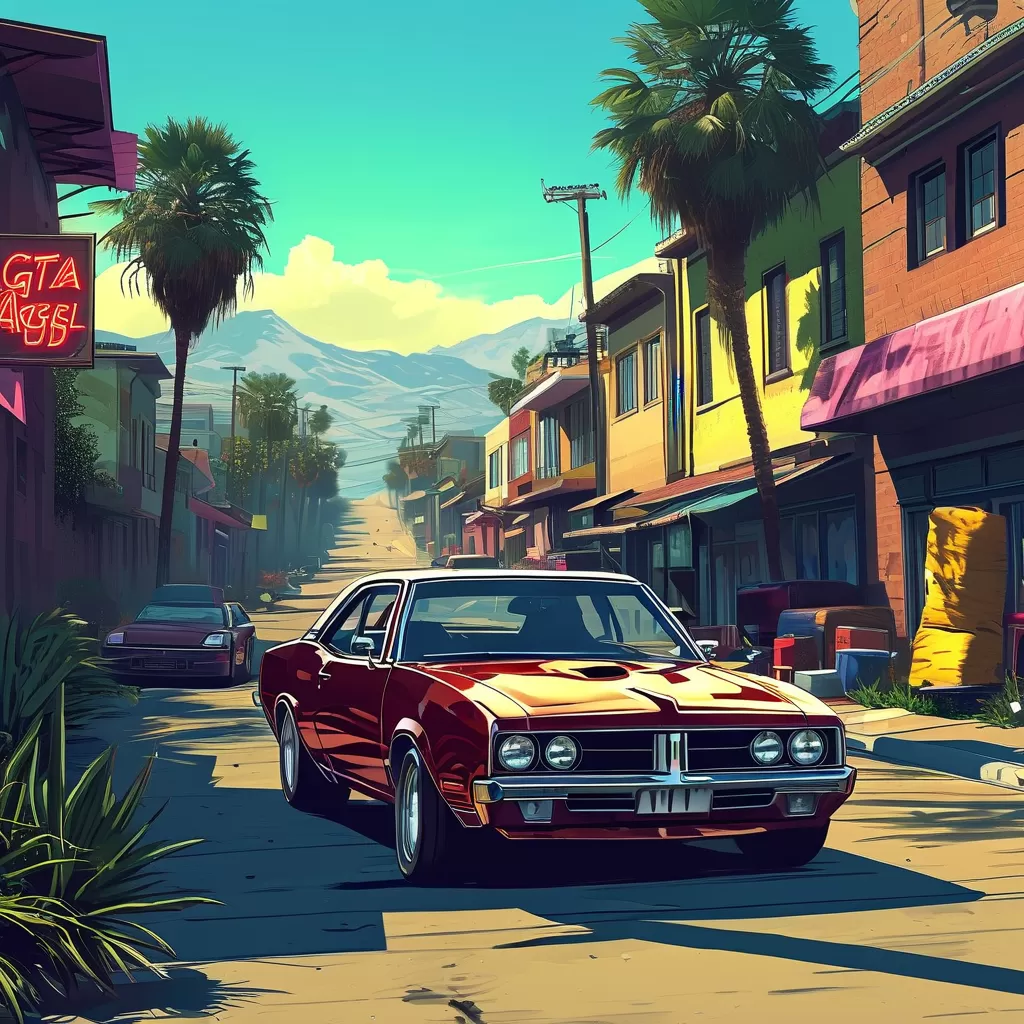
What followed was a masterclass in storytelling within an interactive medium. The journey back was fraught with peril. Carl wasn’t just a player character navigating a map; he was a young man confronting the harsh realities of his past. His return triggered a massive gang war, forcing him from a position of relative safety into the heart of the conflict. His story became deeply personal, intertwined with the fate of his neighborhood and the fictional gangs – the Grove Street Families, the Ballas, and the Varrios – who controlled the streets.
The narrative wasn’t just about shooting your way through missions; it was about feeling. Carl’s journey explored themes of loss, family, redemption, and the cyclical nature of violence. His emotional arc, often conveyed through voice-overs and subtle character interactions, lent weight to the otherwise chaotic world. Returning to San Fierro felt like coming home, a place of safety and stability contrasted sharply with the violence Carl encountered elsewhere. The story of Carl Johnson wasn’t just a plot device; it was the emotional core that made the vast San Andreas world feel lived-in and meaningful.
The Gameplay: Freedom, Faction, and Fidelity
While the narrative provided a compelling through-line, GTA San Andreas offered unparalleled freedom to the player. The gameplay loop was a perfect blend of mission-driven progression and sandbox exploration. GTA $: The Ultimate Money-Grubbing Heist Guide
Core Mechanics and the Ballas Gang
Players could choose to align with one of three gangs – the Ballas, the Grove Street Families, or the Varrios – each offering different advantages and disadvantages. Choosing the Ballas, for instance, initially provided a powerful vehicle (the Ballas van) but hindered the player’s progress in Los Santos. This choice impacted gameplay, adding a layer of strategic decision-making beyond mere combat.
The core mechanics inherited from previous GTA titles were refined and expanded:
 GTA 6 GTA: Rockstar’s Next Chapter—What to Expect in the Highly Anticipated Sequel **Revolutionary Impact: Why GTA III Still Resonates 20 Years Later**
- Stealth and Combat: Players could choose to fight battles head-on or use stealth, employing cover and aiming for high-value targets. Vehicle-based pursuits, often involving spectacular crashes, were a staple of the series.
- Driving and Vehicles: The handling model was intuitive yet deep, allowing for drifts, ramming, and creative vehicle destruction. Hundreds of cars, bikes, and scooters populated the world, each with unique handling characteristics.
- Dialogue and Missions: Choosing dialogue options often impacted relationships with characters and the progression of side quests, adding depth to interactions.
- Sanctuary System: If players died, they would be temporarily relocated to a neutral territory, often forcing them to backtrack and potentially revisit missions.
Iconic Missions and Side Content
The main storyline was punctuated by memorable missions that showcased the game’s scale and creativity:
- Carl’s introduction involved a tense meeting with his cousin, Sweet, who initially distrusted him.
- The iconic “Big Head” mission saw Carl dealing with a rival gang’s leader in a unique, physics-defying encounter.
- Later missions involved infiltrating casinos, escaping prisons, and confronting powerful figures within the game’s criminal underworld.
Beyond the main plot, GTA San Andreas offered hundreds of side missions, scattered across the map. These ranged from simple fetch quests to elaborate heists and complex social interactions. The introverted nature of some characters, coupled with detailed dialogue trees, allowed players to build rapport and uncover hidden storylines. Furthermore, the GTA San Andreas multiplayer component, while less central than today’s online modes, allowed players to engage in competitive races, create missions for friends, or simply explore the world together.
Cultural Fidelity and Legacy
Perhaps one of the most striking aspects of GTA San Andreas was its cultural fidelity. The depiction of West Coast hip-hop culture, the fashion, the slang, and the music (featuring artists like Dr. Dre, Snoop Dogg, and Tupac Shakur, often with explicit or controversial lyrical content) was unprecedented for a mainstream game. While some aspects were fictionalized or exaggerated, the overall cultural impact was undeniable. The game became a cultural touchstone, influencing not just gaming but also popular culture, music, and fashion trends of the era.
Its legacy is immense. It pushed the boundaries of what a video game could achieve, both technically and narratively. It established the modern open-world formula and demonstrated the power of a compelling protagonist within that framework. It popularized the concept of faction alignment in open-world games. And its influence can still be felt today, in the sprawling worlds of games like Red Dead Redemption 2 and in the cultural conversations surrounding video games. GTA San Andreas wasn’t just a game; it was a cultural event.
The Enduring Appeal
So, why does GTA San Andreas remain relevant fifteen years after its release? Why do players revisit its vast, often frustrating, but ultimately rewarding world? Several factors contribute:
First, the sheer scale and detail of San Andreas still hold up remarkably well. Despite the technological advancements since 2004, the ambition and execution remain impressive. The world feels alive, and exploring its diverse